
Views: 0 Author: Site Editor Publish Time: 2025-05-19 Origin: Site


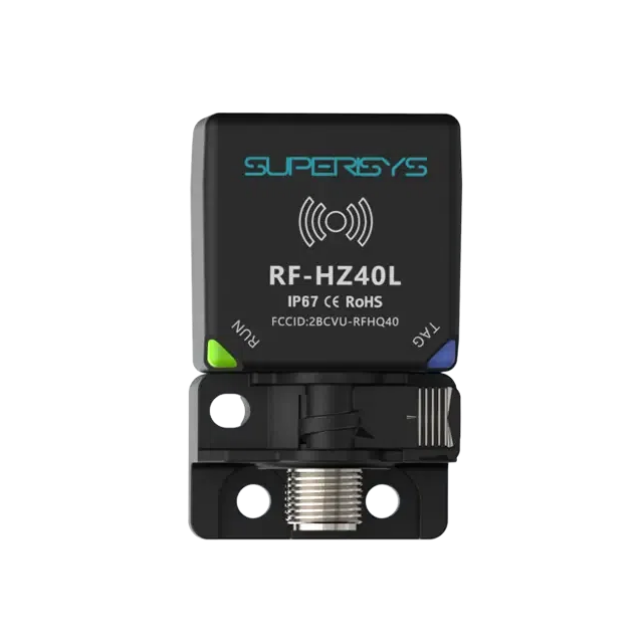
The manufacturing landscape for 3C electronics is witnessing a significant shift driven by rapid SKU proliferation and increasing complexity. Traditional bar-coding and manual tracking methods have proven insufficient for the demands of modern high-speed production lines. Industrial HF RFID Read/Write technology emerges as the next-generation catalyst enabling smart factories to realize real-time traceability and automation, crucial for maintaining competitiveness and meeting stringent quality standards in today’s global market.
Superisys (Wuhan) Intelligent Technology Co., Ltd., a leader in industrial identification and communication technologies, delivers advanced RFID solutions tailored to the rigorous demands of 3C electronics manufacturing. Our products help manufacturers embrace digital transformation and unlock new levels of productivity and precision.
The 3C industry—comprising computers, phones, TVs, and audio devices—is characterized by continuous innovation and a diverse product lineup. As consumer expectations grow, manufacturers face relentless pressure to diversify product portfolios while accelerating time-to-market. This leads to rapid SKU proliferation, with hundreds or thousands of unique variants produced on the same line.
Managing this complexity with traditional tracking systems is an uphill battle. Bar-codes, while widely used, offer static information and require precise line-of-sight scanning, limiting their usefulness in dynamic, fast-paced environments. Moreover, manual data entry is time-consuming and prone to human error, which can cascade into production inaccuracies and quality issues.
Industrial HF RFID Read/Write tags embedded on carriers or components offer a dynamic and scalable solution. These tags can store updated process information, from initial assembly data to test results and quality checks. Because RFID communication is contactless and does not require line-of-sight, dramatically improving the speed and reliability of SKU identification and sorting. This capability allows manufacturers to keep pace with ever-growing SKU varieties without sacrificing throughput or accuracy.
For decades, bar-coding and manual processes have been foundational in manufacturing logistics, yet their inherent limitations become increasingly apparent on high-mix, high-volume 3C production lines. The biggest challenges include scanning errors, label damage, and the inability to record live process data, all of which lead to costly line stoppages and quality risks.
Industrial HF RFID Read/Write technology solves these problems by enabling multi-tag reading, even in dense tag environments and electrically noisy factory settings. ESD-safe RFID systems are specifically designed to operate reliably on electronics assembly lines, where static discharge can otherwise disrupt sensitive equipment. This robustness ensures uninterrupted production flow.
In addition, RFID tags support bidirectional communication. Unlike bar-codes, which only identify an item, RFID tags can be updated with real-time data such as manufacturing stage, operator ID, or component status. This rich data layer allows manufacturers to monitor process health continuously, identify bottlenecks instantly, and respond proactively to quality or logistics issues. The result is a highly agile and transparent production environment that traditional methods cannot match.
Industrial HF RFID systems operate at the 13.56 MHz frequency band, which balances reading range, data transfer speed, and environmental tolerance. This frequency is ideal for manufacturing floors where medium-range, fast, and reliable communication is essential.
Unlike read-only RFID chips that store fixed data, Industrial HF RFID Read/Write tags incorporate EEPROM memory blocks, allowing data to be written, erased, and rewritten throughout the manufacturing cycle. This memory capability is essential for tracking the evolving status of products—from SMT assembly to final packaging.
A crucial feature is anti-collision technology, which prevents data interference when multiple tags are read simultaneously. This capability significantly accelerates data collection on high-volume lines. Compliance with international standards such as ISO 15693 and ISO 14443 ensures interoperability across systems and regions, making implementation seamless for global manufacturers.
For the 3C industry, metal-mount tags have been engineered to maintain signal integrity when attached to metal PCB carriers or housings, addressing a common challenge in electronics manufacturing. These tags resist interference, providing stable and accurate data capture even in the most demanding environments.
The ability to track and trace every component and assembly step in real-time is transforming production management. Industrial HF RFID Read/Write tags enable station-to-station genealogy across the entire manufacturing process—covering SMT, reflow soldering, ICT, functional testing, and final assembly.
This continuous data flow ensures full transparency, allowing operators and managers to monitor progress and status without manual intervention. For example, rework stations can automatically download the correct repair recipe from the tag data, eliminating errors caused by manual setup and ensuring consistent quality outcomes.
Instant fault localization is another key advantage. When a defect is detected, the system pinpoints the exact station and item involved, enabling swift corrective actions. This real-time visibility reduces line stoppages by 15% or more, substantially boosting overall equipment effectiveness (OEE) and throughput.
Embedding parametric test results and supplier data directly on carrier RFID tags provides a comprehensive and tamper-proof audit trail. This capability is essential in 3C electronics manufacturing, where multiple suppliers provide chips, batteries, casings, and other components.
Lot-level granularity allows manufacturers to track each batch’s origin, ensuring traceability down to the smallest unit. If quality issues arise, manufacturers can quickly perform root-cause analysis by reviewing detailed tag data, dramatically reducing investigation time from days to mere hours.
This rapid insight accelerates recall decisions and mitigates risk exposure, protecting both brand reputation and customer safety. It also supports compliance with increasingly stringent global regulations around electronics traceability and product responsibility.
Sustainability is a growing imperative in manufacturing. Industrial HF RFID Read/Write tags are designed for durability, with reusable tags capable of withstanding more than 10,000 heat cycles typically experienced in reflow soldering processes. This longevity eliminates the waste and recurring costs associated with disposable paper labels.
The improved accuracy in tracking reduces scrap rates by minimizing mix-ups and misplacements, saving both material and labor costs. Moreover, the rich data collected enables intelligent energy management—for instance, ovens, testers, and other equipment can enter auto-sleep modes when RFID tags signal idle conditions, driving down power consumption.
Together, these efficiencies help manufacturers meet sustainability goals while improving bottom-line performance, making RFID technology not only a smart operational choice but an environmentally responsible one.
Industrial HF RFID Read/Write technology is becoming the backbone for the next generation of smart, modular, and lights-out factories in the 3C electronics sector. By providing seamless traceability, enhancing quality control, and driving sustainability, this technology empowers manufacturers to shift from reactive troubleshooting to predictive maintenance and AI-driven operational excellence. At Superisys (Wuhan) Intelligent Technology Co., Ltd., we are proud to deliver advanced HF RFID solutions that meet international standards and the rigorous demands of modern electronics manufacturing. Our patented high-speed reading and writing algorithms and robust product range ensure that your 3C manufacturing lines stay efficient, agile, and future-ready.


