
Views: 0 Author: Site Editor Publish Time: 2025-12-12 Origin: Site


The choice of frequency in industrial RFID systems plays a critical role in determining their efficiency and reliability in various industrial applications. The correct frequency choice influences the system's read range, data throughput, environmental performance, and operational cost-effectiveness. As a leading provider of industrial RFID products, Superisys (Wuhan) Intelligent Technology Co., Ltd. offers advanced industrial RFID solutions designed for high-speed data processing and optimal performance across diverse industries. In this article, we will explore the differences between LF, HF, and UHF frequencies, their impact on industrial RFID performance, and guide you on choosing the right frequency for your needs.
RFID frequencies are categorized based on the electromagnetic spectrum they occupy. These frequencies influence how RFID systems operate, from the reading range to the types of materials they can communicate with. Let’s take a closer look at the key RFID frequencies: LF (Low Frequency), HF (High Frequency), and UHF (Ultra High Frequency).
Low Frequency (LF) RFID systems typically operate in the 125 kHz to 134 kHz range. These systems offer a relatively short read range, generally up to 10 cm, but they perform well in environments with a lot of interference from metals or liquids. LF RFID is commonly used for applications where read range is less critical and where durability and reliability are important, such as animal tracking, access control systems, and asset tracking in harsh environments. Despite its limited range, LF RFID tags are less prone to interference, making them suitable for industrial applications where reliability is essential.
Operating in the 13.56 MHz range, High Frequency (HF) RFID systems offer a moderate read range of up to 1 meter. These systems can be more affected by environmental factors such as metal surfaces and liquids but provide better data storage and faster read speeds compared to LF. HF RFID is ideal for applications such as contactless payment systems, library book tracking, and high-volume retail inventory management. In industrial settings, HF tags are used in more controlled environments where a balance between read range and data capacity is required.
UHF RFID operates in the 860 to 960 MHz range, providing the longest read range, typically between 3 and 10 meters, and up to 100 meters in some cases. UHF RFID systems are ideal for asset tracking, inventory management, and logistics in large, open areas such as warehouses and distribution centers. These systems offer high-speed data processing and the ability to handle large volumes of items, making them perfect for industries like automotive, logistics, and supply chain management. However, UHF systems can be more sensitive to interference from metal and liquids, which requires careful placement of tags and readers.
The choice of frequency affects several key aspects of RFID system performance, including read range, throughput, environmental sensitivity, and data capacity.
The read range determines how far away a reader can detect a tag, and it directly impacts the efficiency of the system. While LF tags offer short read ranges, UHF tags provide much longer ranges, which is beneficial in large industrial environments where you need to track assets over greater distances. The throughput, or the number of tags that can be read per second, also increases as you move from LF to UHF, making UHF ideal for high-volume tracking applications.
Environmental factors such as the presence of metal surfaces or liquids can significantly affect RFID performance. LF RFID is less sensitive to interference from metals or liquids, making it a reliable choice in such environments. However, UHF RFID, which offers greater range and data capacity, can struggle with interference and may require special tags designed to work on metal surfaces or in wet environments. As such, it is essential to evaluate the operational environment when choosing the right frequency.
Data capacity varies between LF, HF, and UHF RFID tags. LF and HF tags typically offer limited storage, suitable for basic identification and tracking tasks. UHF RFID tags, on the other hand, provide much larger storage capacities, making them ideal for applications where more detailed data, such as maintenance history or product specifications, need to be stored directly on the tag.
Choosing the right frequency for your RFID system depends on the application and the specific needs of your operations. Below, we explore the most suitable frequencies for different industrial use cases.
In heavy industries like manufacturing, UHF RFID is the best choice due to its long read range and ability to handle large volumes of items. UHF RFID systems can track equipment, tools, and other assets across large facilities or yards, ensuring that valuable resources are always accounted for.
For inventory management in warehouses and logistics centers, UHF RFID is the most commonly used frequency due to its high-speed data processing capabilities and long-range communication. It allows for the efficient tracking of goods in real-time, improving accuracy and reducing operational costs.
For access control systems in secure industrial environments, LF RFID is often preferred due to its reliability and resistance to interference from metals and liquids. Similarly, HF RFID is commonly used for tooling identification in environments where tags need to be read quickly and accurately without the need for long-range scanning.
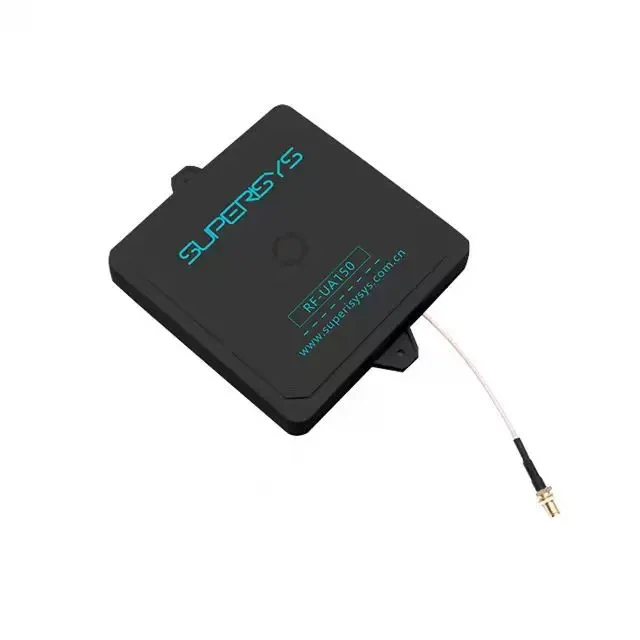
When implementing an RFID system in your operations, several key considerations need to be taken into account to ensure optimal performance.
The choice of reader and read-write device is critical for achieving the desired throughput and read accuracy. The device should support the chosen frequency and be capable of handling the required read range and environmental conditions. Multi-protocol readers are ideal for operations that need flexibility and support for multiple RFID standards.
The type of RFID tag selected should be matched to the chosen frequency. LF tags are best for applications where range is not a priority, while HF and UHF tags are more suitable for high-volume tracking and long-range scanning. Additionally, the tag’s form factor should be compatible with the environment, such as metal-mount tags for industrial applications.
Successful deployment of an RFID system requires careful planning. It’s important to test the system in real-world conditions, adjusting the placement of tags and readers to optimize performance. Consider factors like interference, environmental conditions, and the layout of the facility when designing the system.
Despite their advantages, RFID systems face several challenges in real-world industrial environments. However, with proper planning, these challenges can be mitigated.
Interference from metals, liquids, and other RF devices can disrupt RFID performance, particularly for UHF systems. To overcome this, industrial RFID systems should be carefully designed with considerations for environmental factors. For example, using special metal-mount tags or selecting the appropriate frequency band can help reduce the impact of interference.
In high-volume applications, there is often a trade-off between read accuracy and throughput. UHF RFID systems can read large numbers of tags quickly, but this may come at the cost of accuracy in certain environments. By carefully tuning the system and selecting the appropriate tags, you can achieve a balance between accuracy and throughput.
Different regions have different regulations regarding the use of RFID frequencies. It’s important to ensure that the RFID system you choose complies with local regulations to avoid legal issues and ensure optimal performance.
Choosing the right industrial RFID frequency is crucial for achieving optimal performance, efficiency, and reliability in your operations. Whether you are looking for a short-range, interference-resistant solution like LF RFID or a long-range, high-speed system like UHF RFID, the right choice will depend on your specific application requirements. At Superisys, we provide high-performance industrial RFID solutions tailored to meet the unique demands of your business, ensuring seamless integration and superior performance across a variety of industries. Contact us today to learn more about how our RFID products can help you streamline your operations and boost efficiency.
1. What is the difference between LF, HF, and UHF RFID?
LF RFID is best for short-range applications, HF is suitable for moderate-range tasks, while UHF RFID provides the longest read range and is ideal for high-speed tracking in large facilities.
2. How do I choose the right frequency for my industrial RFID system?
Consider factors such as read range, environmental conditions, and data storage needs. UHF is best for long-range and high-volume applications, while LF and HF are ideal for more controlled environments.
3. Can UHF RFID work in environments with a lot of metal or liquids?
UHF RFID can be affected by interference from metal and liquids. However, special metal-mount tags and careful placement of readers can help mitigate these issues.
4. How can I integrate RFID into my warehouse operations?
Integrating RFID into your warehouse involves selecting the right tags and readers, optimizing reader placement, and integrating the system with your inventory management software to streamline processes.


