


Contents
Introduction
Radio Frequency Identification (RFID) technology is a revolutionary tool that has found significant applications in the warehouse and logistics industry. As businesses strive for more efficient and accurate inventory management, RFID has emerged as a key player in streamlining operations, improving productivity, and reducing errors. With the increasing complexity of modern supply chains, especially in industries such as e-commerce and manufacturing, leveraging industrial RFID systems has become crucial to staying competitive.
This article explores how RFID technology is transforming warehouse operations and logistics management. We will delve into the various applications, challenges, and benefits of Industrial RFID in optimizing workflows, enhancing visibility, and improving overall efficiency in warehouse and logistics settings.
Understanding RFID Technology in Warehouse and Logistics
RFID technology utilizes electromagnetic fields to automatically identify and track tags attached to objects, such as products or pallets, by using radio waves. In the warehouse and logistics sector, Industrial RFID is a vital technology that ensures seamless communication between products, systems, and workers.
RFID tags consist of a small microchip and an antenna that communicate with an RFID reader. This system operates without the need for line-of-sight, unlike traditional barcode scanning, making it more efficient and versatile for large-scale warehouse operations.
Industrial RFID systems in warehouses typically include:
Tags: Attached to items or pallets for identification.
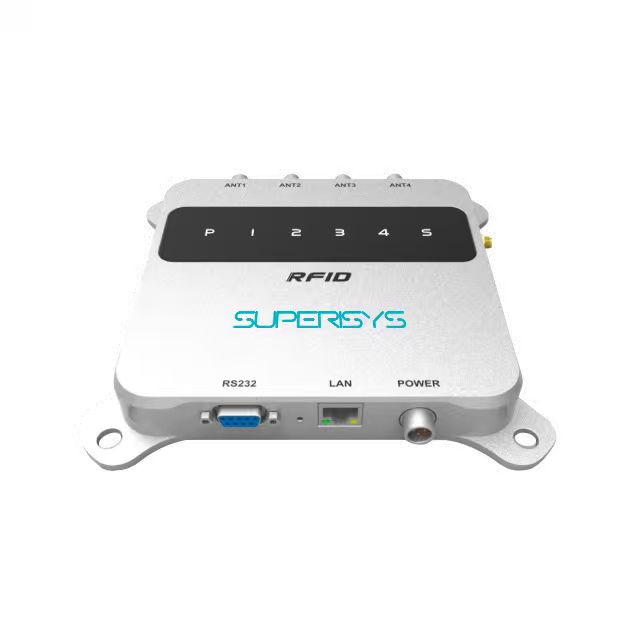
Readers: Installed throughout the warehouse to capture data from tags.
Software: Manages the data collected by the RFID system for analytics and reporting.
By automating data collection, RFID reduces human error, improves accuracy, and helps in real-time tracking of goods throughout the warehouse or distribution network.
The Role of Industrial RFID in Inventory Management
Inventory management is a crucial component of warehouse and logistics operations. The traditional methods of tracking inventory often rely on manual counting or barcode scanning, which can be time-consuming and prone to mistakes. Industrial RFID technology significantly enhances inventory accuracy and control.
How RFID Improves Inventory Management:
Real-Time Visibility: RFID tags allow for real-time updates on the location and status of inventory items within a warehouse. This minimizes the chances of stockouts or overstocking.
Automation: RFID systems automate inventory tracking, reducing the need for manual audits. This can save hours of labor and ensure a more precise count of items.
Inventory Accuracy: RFID improves accuracy compared to traditional barcoding systems. While barcodes need to be scanned manually, RFID tags can be read automatically without human intervention, reducing the likelihood of mistakes.
For example, with RFID, a warehouse manager can track the movement of thousands of items within the facility in seconds. This speed and precision are key in avoiding delays and maintaining optimal inventory levels.
Benefits of RFID Technology in Warehouse Efficiency
Industrial RFID technology offers numerous advantages when it comes to improving warehouse efficiency. Let’s explore how it helps businesses optimize their operations.
1. Faster Processing and Reduced Errors:
Since RFID systems can automatically read tags without direct line-of-sight, it dramatically speeds up processes like receiving goods, shelving items, or shipping orders. This reduces human error and improves operational speed, allowing warehouses to handle larger volumes of goods with fewer workers.
2. Enhanced Workflow Management:
RFID enables warehouse managers to better organize the flow of goods throughout the warehouse. For instance, by tracking the location of every pallet, the system can automatically guide workers to the correct storage location, improving picking and packing efficiency.
3. Improved Resource Allocation:
By gathering data on how long it takes to process each task, RFID systems can help warehouse managers allocate resources more effectively. If certain tasks are taking too long, managers can adjust workflows or add additional labor to meet targets.
4. Reduction in Manual Labor:
RFID technology minimizes the need for manual scanning and stocktaking. It provides automatic, hands-free data capture, which can lower labor costs while increasing the speed of operations.
How RFID Improves Supply Chain Visibility
Visibility is a critical component of an effective supply chain. RFID technology empowers organizations by providing end-to-end visibility of products as they move through the supply chain, from suppliers to the end customer. With RFID tags attached to products, businesses can track items at every stage of the supply chain, including transportation, warehousing, and delivery.
Advantages of Enhanced Visibility through RFID:
Accurate Forecasting: With better visibility, companies can predict demand more accurately, plan their inventory more effectively, and prevent stockouts.
Improved Coordination Between Partners: RFID provides real-time information that can be shared between different players in the supply chain. This fosters greater collaboration and efficiency, especially in a multi-party supply chain.
Reduced Stock Losses and Theft: By continuously monitoring the movement of goods, RFID systems help detect discrepancies in stock levels and prevent theft or misplacement of items.
RFID for Real-Time Tracking and Data Collection
The ability to track inventory in real time is one of the most significant benefits of RFID in warehouses and logistics. Traditional systems often have delays in data collection, resulting in outdated information. RFID enables the collection of data in real time, which is crucial for decision-making.
Key Benefits of Real-Time Tracking with RFID:
Improved Order Fulfillment: With real-time tracking, warehouse operators can instantly access up-to-date information on the availability and location of products. This enables faster and more accurate order fulfillment.
Efficient Inventory Replenishment: RFID enables the continuous monitoring of stock levels, allowing companies to reorder items before they run out, maintaining optimal stock levels and reducing the risk of inventory shortages.
Instant Notifications: RFID systems can trigger automatic alerts when inventory reaches a predefined threshold, when stock is misplaced, or if there is a delay in the supply chain, allowing businesses to take immediate action.
Overcoming Challenges in Implementing RFID in Logistics
While the benefits of RFID in warehouse and logistics operations are evident, implementing this technology can present certain challenges. Businesses must be aware of these challenges and plan accordingly to ensure successful adoption.
Key Challenges of Implementing RFID:
Cost of Setup: Initial costs for implementing RFID technology, including purchasing tags, readers, and software, can be significant. However, the long-term benefits often outweigh these initial investments.
Integration with Legacy Systems: Integrating RFID with existing warehouse management systems (WMS) and enterprise resource planning (ERP) solutions can be complex and time-consuming.
Tag Interference: RFID signals can sometimes be blocked by metals or liquids, which may interfere with tag reading in certain environments. Specialized tags and readers may be required to overcome this limitation.
Employee Training: Workers must be trained to use RFID technology effectively. A lack of proper training can hinder the system’s efficiency and negate its potential advantages.
Future Trends of Industrial RFID in Warehousing and Logistics
The future of RFID technology in warehouses and logistics looks promising, with continuous advancements in both hardware and software. Some of the emerging trends include:
Integration with IoT (Internet of Things): As IoT technology evolves, RFID systems are expected to integrate with IoT devices to provide even more detailed and actionable data.
AI and Machine Learning: The combination of RFID with artificial intelligence will allow warehouses to predict trends, automate restocking, and enhance predictive maintenance.
Cloud-Based RFID Solutions: More warehouses will move to cloud-based RFID solutions, allowing for better scalability, remote management, and integration with other enterprise applications.
These innovations will continue to reshape how RFID is used in logistics, providing even greater efficiency, accuracy, and insights for businesses.
Conclusion
Industrial RFID technology is rapidly transforming the landscape of warehouse and logistics operations. By improving inventory management, enhancing workflow efficiency, and providing real-time tracking and visibility, RFID enables businesses to stay competitive in an increasingly complex and demanding supply chain environment. Although there are challenges in implementing RFID systems, the benefits they offer—such as reduced labor costs, improved accuracy, and better resource allocation—make them an essential investment for modern logistics operations.
FAQ
1. How does RFID technology improve warehouse efficiency?
RFID improves warehouse efficiency by automating data collection, reducing human errors, speeding up inventory tracking, and enhancing workflow management. It eliminates the need for manual scanning and provides real-time visibility of inventory.
2. What is the main difference between barcode and RFID technology?
While barcodes require a direct line of sight and manual scanning, RFID does not require line-of-sight and can automatically capture data, making it faster and more efficient in high-volume environments.
3. Is RFID technology costly to implement?
Initial setup costs for RFID systems can be high, including the purchase of tags, readers, and software. However, over time, the efficiency improvements and cost savings from reduced labor and errors make RFID a cost-effective solution.
4. Can RFID technology be used in all types of warehouses?
RFID is versatile and can be used in most types of warehouses, but certain challenges may arise in environments with high levels of metal or liquid, which can interfere with RFID signals. Specialized tags and readers can overcome these issues.
5. What is the future of RFID in logistics?
The future of RFID includes deeper integration with IoT, AI, and cloud-based solutions, which will provide even greater insights, automation, and predictive capabilities, further enhancing the efficiency of warehouse and logistics operations.


